
2025-04-16
Nigeria and the EU
Nigeria and the EU have shown interest in investing in Mining.
2025-04-07
Activities in the USA
Our operational investments in the United States have been temporarily suspended until 2028. This decision follows the implementation of broad tariff measures by President Donald Trump, which have significantly impacted global trade dynamics. These policies have contributed to a worldwide economic slowdown and are expected to have long-term implications for the U.S. economy. We view this situation as primarily political in nature, and we remain committed to reassessing our position should conditions improve.
2025-02-19
USA Vice President Statement
At Invest Business House, we manage substantial financial resources and large-scale projects, making it imperative to mitigate risks for our partners and clients. Consequently, we have reached the following decision:
Normally, Invest Business House refrains from engaging in political matters. However, recent developments concerning the President and Vice President of the United States have led the company to temporarily suspend all investment activities in American companies and projects. This decision is driven by the unprecedented nature of the exceptions related to the European Union, which have not been introduced by any previous U.S. administration. From both a political and economic perspective, this course of action is without justification and represents an unprecedented and deeply concerning move.
2025-02-02
War Tax – A Threat to Economic Stability
In 2025, several countries are considering introducing a war tax, but this approach risks undermining both growth and economic stability. History has shown us that financial burdens of this nature can have severe consequences.
The countries discussing a war tax seem not to have learned from past mistakes—such as the Wall Street crash in 1929, which led to a global economic depression, or the rise of Nazism in 1936, where economic instability played a crucial role. Today, we see similar patterns unfolding, with Russia at the forefront and major powers like the USA and China in the background.
If these countries do not put an end to their confrontations, we risk a total collapse of the global economy—driven solely by the desire to reshape the world order through force. The notion that a NATO country would attempt to attack another NATO member is unheard of and draws historical parallels to Hitler’s aggression between 1940 and 1945.
The international community must act responsibly and seek diplomatic solutions to prevent a new global crisis.
2025-01-21
Inauguration of the New American President, Donald Trump: A Mixed Perspective
The inauguration of Donald Trump as the President of the United States presents both advantages and challenges.
Many overlook that Donald Trump is fundamentally a businessman, one who tolerates no room for error or inefficiency.
The Positive Aspects of Donald Trump’s Presidency
One notable benefit of Donald Trump’s administration is his strong stance against criminal gangs and illegal immigration in the U.S., issues that also affect the European Union. However, while the U.S. under Trump actively addresses these problems, European states appear to be doing far less.
The Negative Aspects for the European Union
A major concern for the EU is Trump’s plan to raise trade tariffs. This move would make exported goods from Europe more expensive for U.S. consumers, potentially harming European businesses reliant on the American market.
Business Strategies in Light of U.S. Policy Changes
Companies can adapt to these changes in several ways:
- Focus on quality and innovation: Delivering high-quality products or securing patents can ensure continued competitiveness in export markets.
- Explore alternative markets: Diversifying export destinations can mitigate risks associated with U.S. protectionist policies.
A Reflection on Europe’s Economic State
While some claim that the EU is facing a crisis, the real issue lies elsewhere. Many businesses and governments in the EU appear to be “asleep at the wheel,” failing to adapt to changing global dynamics. A fundamental flaw in European governance is the lack of integration between political strategies and economic pragmatism; policymakers often prioritize political ideologies over business-oriented thinking.
Addressing the Role of Immigrants
Immigrants already residing in the EU should be subject to clear expectations and offered opportunities to integrate through education and skills development. At the same time, it is crucial to combat workplace racism and leverage the competencies immigrants bring to the table. Treating them with dignity and equity is essential for fostering social and economic cohesion.
Conclusion
Donald Trump’s presidency marks a significant shift in global dynamics, offering both opportunities and challenges. For Europe to thrive in this new reality, it must embrace proactive policies that integrate economic innovation, inclusivity, and practical governance.
2025-01-18
The Future of Denmark: An Analysis of Political and Structural Challenge
The discussion about Denmark’s future is central in light of the political and economic challenges the country faces. It is important to note that this analysis is not politically motivated but seeks to highlight the structural issues affecting Denmark.
Denmark’s current political approach can be characterized as optimistic and, at times, unrealistic concerning economic and social realities. Personal taxation is among the highest in the world, placing a significant burden on the workforce. These high taxes risk stifling both growth and innovation. At the same time, corporate taxation, currently at 22%, is problematically high, posing challenges to businesses’ competitiveness both nationally and globally.
In the area of immigration, the policies have been marked by a lack of long-term solutions. Over the past 15 years, measures in this domain have failed to deliver the desired results, contributing to a sense of stagnation and division. Similarly, integration policies, which have been on the political agenda for more than 40 years, have not achieved the necessary improvements in integrating newcomers.
A particular challenge arises from individuals or groups involved in extremist or terror-related activities. To ensure the country’s security, such individuals must be met with a firm and uncompromising approach. This means that those assessed to pose a threat to society should be expelled, regardless of whether they face the death penalty in their home country. While this policy may present ethical and legal dilemmas, it is deemed necessary to ensure stability and security in Denmark.
Judicial policies largely appear unpredictable and inconsistent, creating uncertainty among both citizens and businesses. Price regulations and economic policies are often criticized for lacking coherence and long-term planning.
The issue of Greenland clearly illustrates the complexity of Denmark’s foreign and domestic policies. The Danish approach has often been perceived as paternalistic, with critics pointing out that the population of Greenland has been underprioritized concerning their right to self-determination and economic development.
A significant challenge is that the civil service and political leadership often lack in-depth knowledge of the country’s economic opportunities, including the exploitation of natural resources. This can have severe consequences for Denmark’s future prosperity.
As an old proverb states: “First you must give, then you can enjoy.” Many critics argue that the political decision-makers have turned this principle upside down, risking leading Denmark into an economic crisis over time. If the current political course continues, it could have serious consequences for both citizens and businesses. Many wealthy individuals and organizations are already considering moving their activities out of the country because the political direction is perceived as restrictive and focused on control rather than finding solutions.
It is crucial to implement a transformation in the political culture. Instead of short-term gains and self-interest, the focus should be on developing long-term strategies that promote growth, prosperity, and social cohesion.
2024-12-01
Influence and Power:
Many business owners have a fear of letting an investment company take over their business, which is a common misconception. When Invest Business House finds investors for a family-owned business, the goal is to help the company increase its sales opportunities. We secure your business are aware from the outset that the owner will remain the CEO and Chairman of the Board, with a minimum ownership stake of 52%. The investor invests a sum (X) over a period of 5 to 20 years. After this period, the investor exits, and the ownership stake of the remaining percentage reverts to the CEO.
Note: The CEO remains the majority owner throughout, as the owner is the one who knows the business and its customers best.
What we do as an investment company:
- We secure capital for your business.
- We assist in expanding your business.
- We increase sales, including globally.
When it comes to business sales, this is a different matter: We acquire businesses with significant value, often replacing the management with a professional leadership team according to international standards. We inject capital and acquire an ownership stake proportional to the amount of capital invested.
The same approach applies when investing large sums in a large company.
2023-07-01
Recommendation from the Invest Business House: Many African countries have a good economy and are politically stable. Invest Business House recommends investors contact us for more details.
2023-07-01
A political analysis of Ukraine. Ukraine may be the country in Eastern Europe that has the greatest potential for investment in industrial production facilities. In general, it will require investment from the EU, funds, and business angels. All this can be done when the Russians are kicked out of Ukraine and stay out.
2023-03-20
Since the crash of Wall Street in 1929, the world has not learned. Because greed in the financial crisis and the financial sector is to blame for many people losing private savings with the government’s blessing, in the EU, the state guarantees €100,000 if a bank fails.
The same thing happened on Wall Street in 1929 because some idiots gambled on stocks trading with private people’s savings. And those idiots do it until there is responsibility for the loss. And it is democratic. 
As Business Angel, we take this sick and greedy world very seriously.
The banks do not have a safety net that covers 100% of private savings.
Therefore, significant capital funds are not seen in Denmark either.
The funds found in Denmark live on borrowed time. Sweden has the same. EU countries have yet to learn responsibility for individual citizens in securing 100% of private citizens’ money.
Act as a Business angel and use only 25% of your wealth on share trading and the other 25% on investing in healthy or start-up companies, but not in Denmark, because taxes are the highest in the world and this does not benefit the company or investors. Said in good English, Danish companies in Denmark have not been investing in you.
Always invest in Gold (physical Gold Bar) 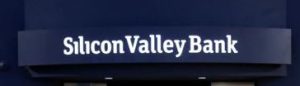
From 2023-03-14 to 2023-03-20
two big banks crashed.
US: Silicon Valley Bank
Switzerland: Credit Suisse Bank